
If you’re searching this, you’re probably staring at a water stain, a weird smell, or a quote that feels too good to be true. The short answer: choose a restoration company by checking what they’re actually certified to do, getting the scope of work in writing before any demolition starts, and asking directly whether the company doing the inspection is the same one that profits from the repair. In Burlington, where housing stock ranges from older colonials to mid-century splits and newer builds, the right company for a burst pipe is not always the right company for a mold problem or old asbestos tile. Knowing the difference up front saves you money and keeps you out of a bad contract.
Water, Fire, and Mold Are Not the Same Job
A lot of homeowners assume “restoration company” means one firm that handles everything from a flooded basement to smoke odor to a moldy bathroom ceiling. Some companies do offer all three. But flood and fire jobs involve structural drying, content cleaning, and often reconstruction, while mold remediation and asbestos abatement are closer to environmental and safety work: containment, testing, controlled removal, and air clearance. If a company tells you they can do all of it with the same three-person crew and no mention of containment protocols, that’s worth a second opinion.
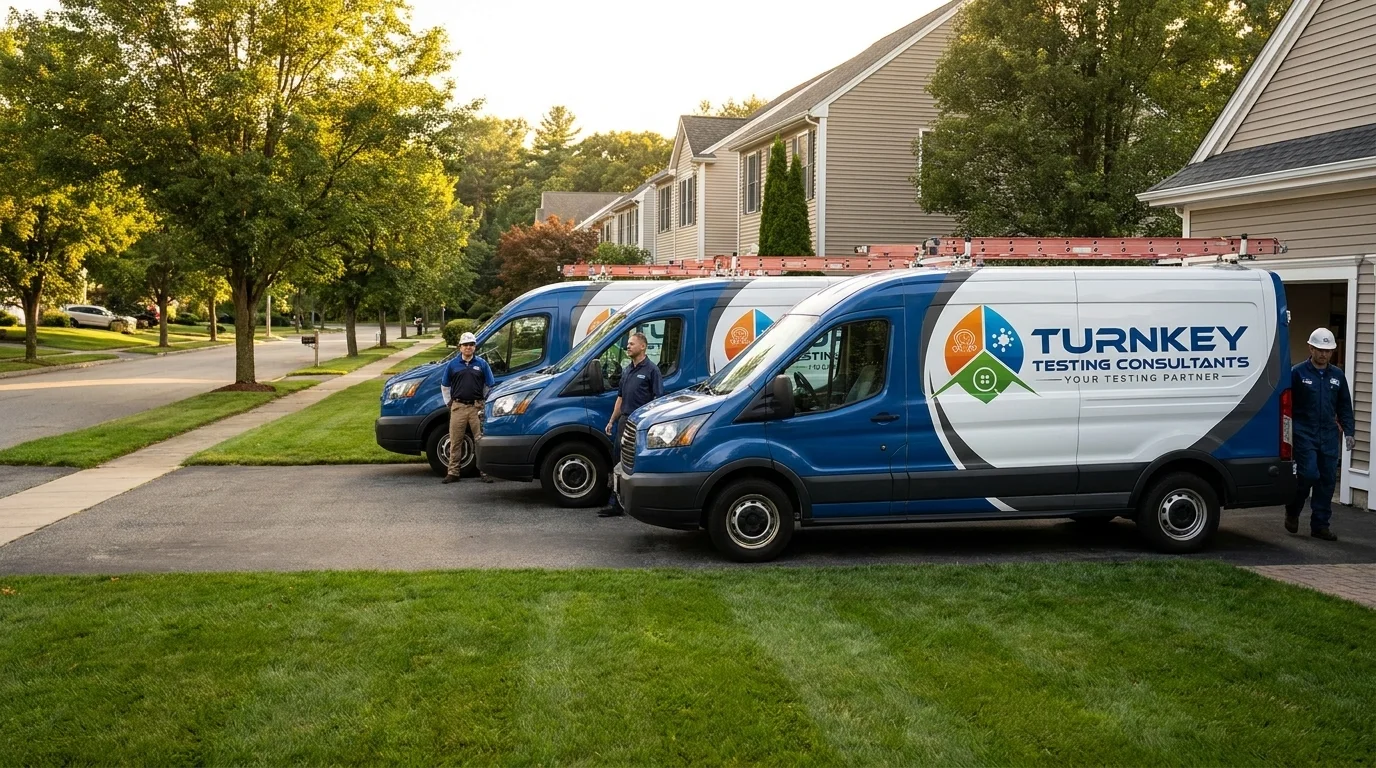
Turnkey Testing Consultants works specifically in mold remediation, mold inspection and testing, and asbestos abatement in Burlington. If your situation is an active water leak or fire damage, that’s a different specialty, and you’ll want a restoration contractor who focuses on structural drying and rebuild. Knowing which category your problem falls into is the first filter.
Questions to Ask Before You Sign Anything
Ask these before any contract or deposit:
- What exactly will the inspection look for, and is it separate from the remediation bid? A company that inspects and then immediately quotes a large remediation job, with no lab sample or written findings, is skipping a step that protects you.
- What training or certification does the crew doing the work actually hold? Don’t accept “we’re certified” as an answer. Ask which certification, for which service.
- Will you put the scope of work in writing, including what’s being removed, tested, or treated? Verbal promises don’t hold up if the job changes mid-way.
- How do you handle air clearance or post-work verification? For mold and asbestos work, this is not optional, it’s how you know the space is safe to re-occupy.
- Do you subcontract any part of the job? If so, ask who is actually licensed for that portion.
If a company hesitates or gets vague on any of these, that’s information too.
Red Flags That Mean Keep Looking
- Same-day demolition before any testing. Especially with suspected mold or in a home built before the 1980s where asbestos-containing materials like pipe insulation, floor tile adhesive, or old ceiling texture are common. Disturbing these materials without containment is a health risk, not just a cost issue.
- Pressure to sign immediately because “the mold is spreading” or “your insurance deadline is today.” Legitimate urgency exists, but a rushed signature with no written scope is how homeowners end up paying for work they didn’t actually need.
- No mention of containment or negative air pressure when the conversation turns to mold remediation. Containment is standard practice for isolating a work area so spores don’t spread to the rest of the house.
- Refusal to provide a written estimate broken down by task. A single lump-sum number with no detail makes it hard to know what you’re actually paying for.
- No OSHA or safety training mentioned for crews handling asbestos or mold. This work involves real exposure risk to workers and occupants, and training matters.
What a Legitimate Mold or Asbestos Inspection Looks Like
A real inspection starts with a visual assessment and, where appropriate, sampling, whether that’s air sampling for mold spores or material sampling for suspected asbestos. The inspector should be able to explain what they’re testing, why, and how long results typically take to come back from a lab. You should receive a written report, not just a verbal “yeah, that’s mold” or “that’s probably fine.”
For asbestos specifically, many materials that look unremarkable, old vinyl floor tile, textured ceiling popcorn, pipe wrap in a utility closet, can’t be identified as asbestos-containing by sight alone. That’s why testing comes before any abatement plan, not after someone has already started pulling up flooring.
For mold, the inspection should identify not just the visible growth but the underlying moisture source. Treating visible mold without addressing what’s feeding it (a slow leak, poor ventilation, a grading issue outside) means the problem comes back.
When to Call a Specialist
Call a mold or asbestos specialist when:
- You see discoloration, smell a persistent musty odor, or notice it recurring after a cleaning attempt.
- You’re planning a renovation in a home built before the 1980s and will be disturbing old flooring, insulation, or ceiling material.
- A home inspection or real estate transaction flagged a suspected material that needs testing before closing.
- A previous water event was cleaned up on the surface, but you’re still noticing a smell or soft spots in flooring or drywall weeks later.
If the active problem is a burst pipe, active flooding, or fire and smoke damage, you’ll want a restoration contractor equipped for structural drying, content cleaning, and rebuild. Turnkey Testing Consultants can point you toward testing and remediation once the active water or fire event has been stabilized by the right specialist, but the acute water or fire response itself isn’t part of what we do.
Choosing the right company for Burlington’s older and newer housing stock alike comes down to matching the problem to the specialty, asking for documentation at every step, and being willing to walk away from anyone who skips testing in favor of a fast demolition job. A company confident in its process will welcome the questions above, not avoid them.
If you’re dealing with a suspected mold issue or need to know whether a material in your home contains asbestos before a renovation, Turnkey Testing Consultants handles mold inspection and testing, mold remediation, and asbestos abatement for Burlington homeowners. Call (978) 482-6260 to talk through what you’re seeing before you commit to any contractor.