
Mold Inspection and Testing in Burlington
Mold inspection and testing in Burlington and surrounding areas. Insurance billing accepted. Call (978) 482-6260.
If your home or office has a musty smell that air fresheners can’t fix, or you’ve spotted a water stain that keeps coming back, you need an answer grounded in data, not guesswork. Mold inspection and testing identifies what’s actually growing, where it’s spreading, and how it’s affecting the air you breathe, before you spend money on remediation you may not need, or skip remediation you actually do.
What Mold Inspection and Testing actually involves
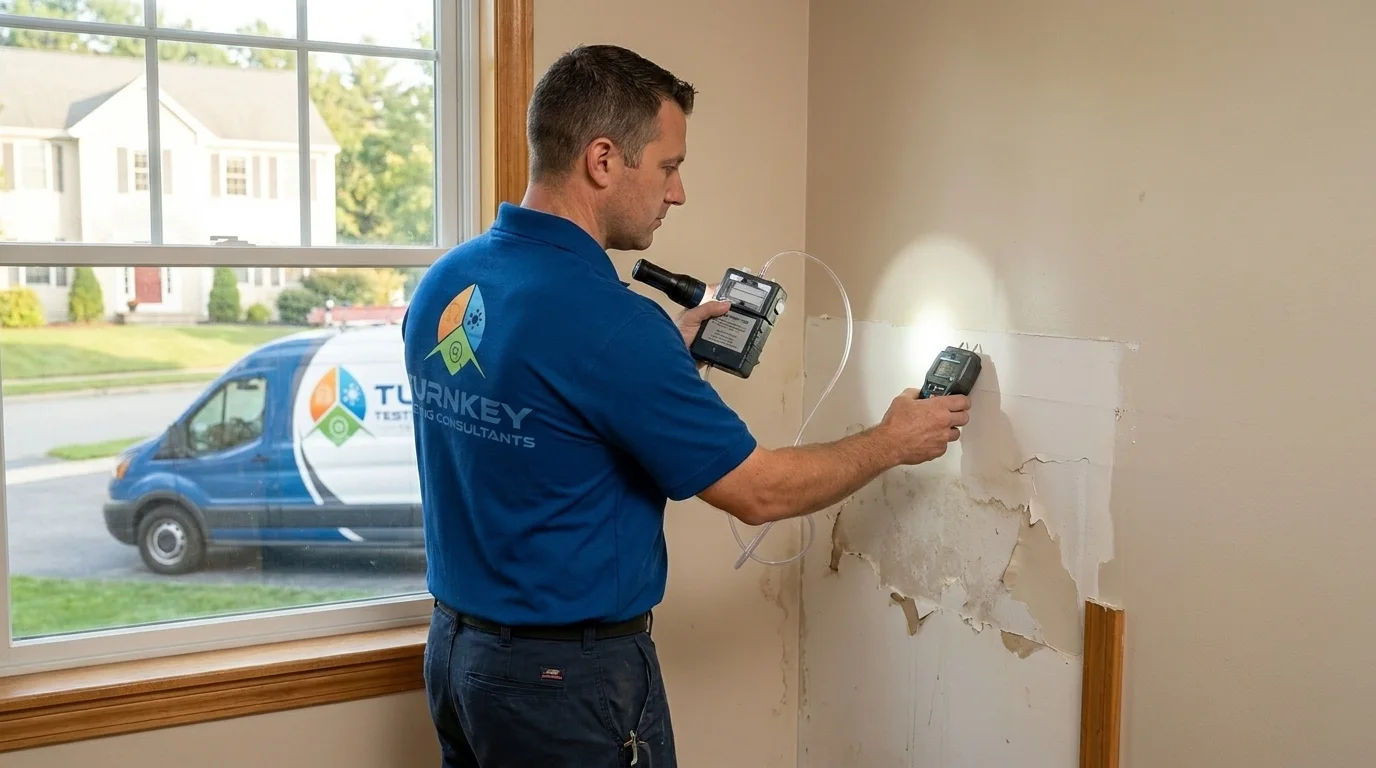
A proper mold inspection starts with a visual and moisture-driven survey of the property: crawlspaces, attic sheathing, behind baseboards near past leaks, HVAC returns, and any area with a history of water intrusion. Inspectors use moisture meters and sometimes thermal imaging to find hidden damp pockets inside wall cavities or under flooring that aren’t visible to the eye. From there, air sampling and surface sampling determine spore counts and species, comparing indoor air quality against an outdoor baseline sample. Lab turnaround for spore analysis typically takes a few business days, and results come back with a written report that breaks down what was found, where, and at what concentration.
This is diagnostic work, not demolition. The goal is a clear, documented answer: is there an active mold issue, how extensive is it, and does it warrant remediation. That report becomes the scope of work if remediation is needed, and it’s also the documentation most insurance adjusters and real estate transactions require.
Our process
- Initial consultation and visual walkthrough. We review the history of the space, any prior leaks or water events, and visible signs like staining, warping, or visible growth.
- Moisture mapping. Moisture meters and thermal imaging locate damp building materials that may be feeding mold growth even where nothing is visible yet.
- Air and surface sampling. Spore trap samples measure airborne concentrations; swab or tape-lift samples identify species on visible growth or suspect surfaces.
- Outdoor baseline comparison. An outdoor air sample is taken the same day so lab results can be read against the local background spore level, not in isolation.
- Lab analysis and written report. Results are translated into a plain-language report with sampling locations, spore counts, species identified, and a recommendation on next steps.
What separates a good mold inspection from a bad one
The most common shortcut in this industry is skipping the outdoor baseline sample. Without it, an indoor spore count means very little; mold spores are present in outdoor air everywhere, and what matters is whether indoor levels are elevated relative to that baseline and whether the species found are typically associated with water-damaged building materials. A second common gap is testing only the room with the visible stain and ignoring adjacent cavities, since spores travel through HVAC returns and wall voids well beyond where a leak originated.
Insurance adjusters and remediation contractors both look for the same thing in a report: sampling locations tied to a floor plan, lab chain-of-custody documentation, and clear language distinguishing “elevated” from “normal” rather than vague adjectives. A report built this way holds up whether it’s used to scope a remediation job, dispute a claim denial, or satisfy a buyer’s inspection contingency before closing.
What does Mold Inspection and Testing cost?
Costs vary based on square footage, number of sampling points, and whether thermal imaging is needed to locate hidden moisture. Every property is different, which is why Turnkey Testing Consultants provides a written scope of sampling locations and pricing before any testing begins. Homeowners insurance sometimes covers inspection costs when mold is tied to a covered water loss, but routine or preventive testing is typically an out-of-pocket expense.
| Scenario | Typical range |
|---|---|
| Single-room visual inspection, no sampling | $200 - $400 |
| Standard inspection with 2-3 air samples | $400 - $700 |
| Whole-home inspection with multiple sampling points | $700 - $1,200 |
| Inspection with thermal imaging and crawlspace access | $900 - $1,500 |
| Pre-remediation scoping for a documented water loss | $500 - $900 |
| Post-remediation clearance testing | $350 - $650 |
Seasonal & regional considerations
New England’s humid summers and the freeze-thaw cycle of a Massachusetts winter both create conditions for hidden moisture. Older Burlington-area homes with fieldstone or poured foundations from earlier building eras are prone to seasonal dampness in basements and crawlspaces, especially during spring thaw and late-summer humidity spikes, both windows when mold can establish itself inside wall cavities before any smell or stain becomes obvious at the surface.
Service area
Turnkey Testing Consultants performs mold inspection and testing for homeowners and property managers in Burlington, Massachusetts.
If something in your home doesn’t smell right, or you need documentation before a remediation job, a sale, or an insurance claim, request an air quality test and get a report built on lab data instead of a guess.
Frequently Asked Questions
Does homeowners insurance cover mold inspection and testing?
What's the difference between air sampling and surface sampling?
Why do you test outdoor air if I'm worried about indoor mold?
How long does it take to get mold test results back?
Can I just look for mold myself instead of paying for testing?
Do I need remediation if my test comes back positive?
Looking for the best mold inspection and testing company in Burlington?
Turnkey Testing Consultants provides licensed and insured mold inspection and testing in Burlington, MA and the surrounding area. We answer calls 24/7 — call (978) 482-6260 for immediate help.
Need Mold Inspection and Testing now?
We respond 24/7 across Burlington and surrounding MA cities.