
Mold Remediation in Burlington
Mold remediation in Burlington and surrounding areas. Insurance billing accepted. Call (978) 482-6260.
A musty smell that won’t go away after a leak dried up, dark speckling creeping along a bathroom ceiling, or a basement that stays damp no matter how often you run a dehumidifier: these are the signals that mold has moved past a surface nuisance and into something that needs to be physically removed, not just sprayed over. Mold colonizes porous building material fast, often within 24 to 48 hours of sustained moisture, and bleach or consumer sprays don’t reach what’s growing inside drywall, subfloor, or framing.
What Mold Remediation actually involves
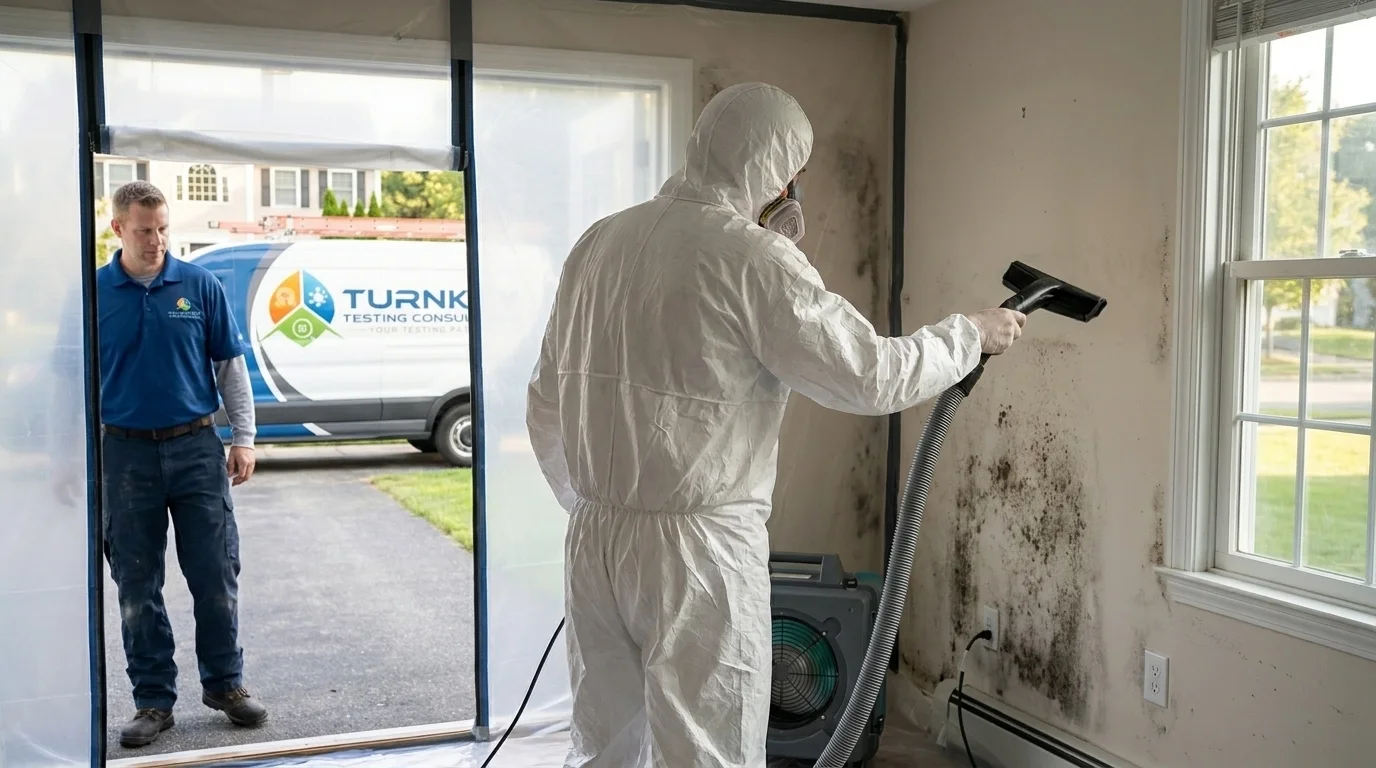
Mold remediation is the physical removal of mold-contaminated material and the treatment of the surfaces left behind, done in a way that keeps spores from spreading to the rest of the structure while the work is underway. That means sealing off the affected area, running negative air machines with HEPA filtration, removing and bagging material that can’t be salvaged (soaked drywall, insulation, carpet pad), and treating the structural surfaces that remain with antimicrobial solutions. Depending on the footprint, a job can run from a single day for a contained bathroom ceiling to a week or more for a basement or crawlspace with widespread colonization. The work is physical and dusty, which is why containment and air filtration aren’t optional steps, they’re what keeps the remediation from turning into a bigger problem than it started as.
Our process
- Source and extent assessment. Before any material comes out, we identify what fed the growth (a slow plumbing leak, grading that pushes water toward the foundation, a roof flashing failure) and map how far the colonization has traveled behind walls or under flooring.
- Containment setup. Plastic sheeting and negative air pressure isolate the work area from the rest of the home so spores disturbed during demolition don’t migrate into living space or the HVAC system.
- Material removal and HEPA filtration. Non-salvageable material is removed and bagged on-site, and HEPA-filtered air scrubbers run continuously to pull airborne spores out of the contained zone.
- Antimicrobial treatment and drying. Remaining structural surfaces are cleaned and treated, and the area is brought to a normal moisture level before containment comes down.
- Post-remediation verification. Once visible mold and the moisture source are addressed, the area is inspected before we close out the job, giving you documentation of what was found and what was done.
What separates a good mold remediation response from a bad one
The most common mistake isn’t in the removal, it’s in skipping the source. A crew that pulls out moldy drywall and repaints without fixing the leak or ventilation problem that caused it is setting the homeowner up for a repeat job within a year. The second most common gap is containment: without proper plastic sheeting and negative air, demolition work can push spore counts up in rooms that were never contaminated to begin with, which is a documented liability on reconstruction jobs. Insurance adjusters reviewing a mold claim also look for a clear paper trail: photos of the affected material before removal, a scope of the square footage treated, and confirmation that the moisture source was corrected, not just the visible mold.
What does Mold Remediation cost?
Cost depends heavily on the square footage affected, whether the growth is contained to a surface or has spread behind walls and flooring, and whether structural material needs to be removed and replaced. Every job gets a written scope before work begins so there are no surprises once containment goes up. Homeowners insurance typically covers mold remediation when the growth stems from a sudden, covered event like a burst pipe, but usually excludes mold tied to long-term neglect or ongoing humidity issues, so it’s worth checking your policy language before assuming coverage.
| Scenario | Typical range |
|---|---|
| Small bathroom or closet, surface mold | $500 - $1,500 |
| Single room, contained growth behind drywall | $1,500 - $4,000 |
| Basement or crawlspace, moderate spread | $3,000 - $8,000 |
| Whole-house HVAC contamination | $6,000 - $15,000+ |
| Attic mold from roof leak | $2,000 - $6,000 |
Seasonal & regional considerations
New England summers bring the kind of sustained humidity that lets mold establish in basements and crawlspaces even without a visible leak, especially in older Burlington homes with fieldstone or poured foundations that weren’t built with vapor barriers. Winter brings a different trigger: condensation behind poorly insulated walls and attics when warm, moist indoor air meets cold sheathing. Both patterns mean mold problems here often show up seasonally rather than all at once, which is part of why a moisture source gets identified before remediation starts rather than after.
Service area
Turnkey Testing Consultants handles mold remediation for homes and businesses in Burlington, Massachusetts, working under license #AF134 and OSHA Trained protocols for safe material handling and containment.
If you’re seeing recurring discoloration, smelling mustiness that won’t clear, or coming off a water leak that sat for more than a day, don’t wait for it to spread further through the structure. Request an air quality test and a remediation scope from Turnkey Testing Consultants, available 24/7 to get your assessment scheduled.
Frequently Asked Questions
Does homeowners insurance cover mold remediation?
What level of mold remediation requires full containment?
Can I stay in my home during mold remediation?
What's the difference between mold removal and mold remediation?
Will mold come back after remediation if the leak isn't fixed?
Looking for the best mold remediation company in Burlington?
Turnkey Testing Consultants provides licensed and insured mold remediation in Burlington, MA and the surrounding area. We answer calls 24/7 — call (978) 482-6260 for immediate help.
Need Mold Remediation now?
We respond 24/7 across Burlington and surrounding MA cities.