
The Short Answer
A DIY mold test kit can tell you that mold spores are present in your air or on a swabbed surface. It can’t tell you where the mold is growing, how large the colony is, what’s feeding it, or whether what you’re smelling is even mold at all. If you have a visible stain, a musty smell, or a health concern tied to a specific room, a professional inspection with lab-analyzed samples gives you an answer you can actually act on. If you’re just curious after reading about a neighbor’s basement, a DIY kit is a reasonable first step.
When People Start Looking Into Mold Testing
Most people searching this topic fall into one of a few situations. There’s a musty smell in a bathroom, basement, or crawlspace that won’t go away no matter how much they clean. There’s a water stain on a ceiling or wall from a slow leak that may or may not still be active. Someone in the house has started coughing, getting headaches, or having allergy flare-ups that seem worse at home. Or a home is about to be sold or bought, and mold has come up as a concern during the inspection process.
Each of these calls for a different level of testing. A faint smell with no visible growth might start with a DIY kit. A visible stain behind drywall, especially after a known leak, usually needs someone to physically look behind the material, not just sample the air in the room.
How DIY Mold Kits Actually Work
Most store-bought kits fall into two categories: a petri dish you leave open in a room for a set number of hours, or a swab you wipe across a surface and mail to a lab. Here’s what each one can and can’t tell you:
- Petri dish / settle plate kits collect whatever spores happen to settle onto the dish during the exposure window. They’re inexpensive and give you a visual “something grew” result, but they don’t tell you the species, the concentration in your air compared to outdoor baseline, or where the source is.
- Swab kits confirm whether a visible stain or discoloration is actually mold versus dirt, soot, or mineral staining. This is useful, but it only tests the one spot you swabbed. It won’t tell you if the same growth exists inside the wall cavity or under the flooring.
- Air sampling kits (the pump-style ones) are closer to what a professional uses, but without a second, outdoor control sample for comparison, the number you get back is hard to interpret on its own.
The common thread: DIY kits answer “is something here?” They rarely answer “how bad is it, where did it start, and what do I do next?”
What Not to Do
- Don’t paint or caulk over a visible stain before testing it. Once it’s sealed, you’ve lost the chance to swab it, and the growth underneath keeps going.
- Don’t rely on bleach as a long-term fix for porous material. Bleach can change the color of mold on drywall or wood without killing the roots growing into the material, which can mean it’s back in a matter of weeks.
- Don’t assume a clean air sample means a clean house. Mold inside a wall cavity or under subfloor doesn’t always show up in a general room air sample, especially if the area isn’t disturbed during the test.
- Don’t ignore the moisture source while you focus on the mold. Testing tells you what’s there. It doesn’t fix the leak, the condensation, or the grading issue that’s feeding it. If the water problem isn’t solved, any remediation, DIY or professional, is temporary.
When to Call a Professional
A few signals suggest it’s time to move past a store-bought kit:
- The affected area is larger than roughly a 3-foot by 3-foot patch of visible growth.
- The growth followed a known water event, a leak, a roof issue, a flooded basement, where moisture likely reached more than one material or room.
- Someone in the home has a diagnosed respiratory condition or a doctor has raised concerns tied to indoor air quality. A DIY kit came back positive but you have no idea where the source is. You’re buying or selling a home and need documentation a lender, buyer, or insurer will accept.
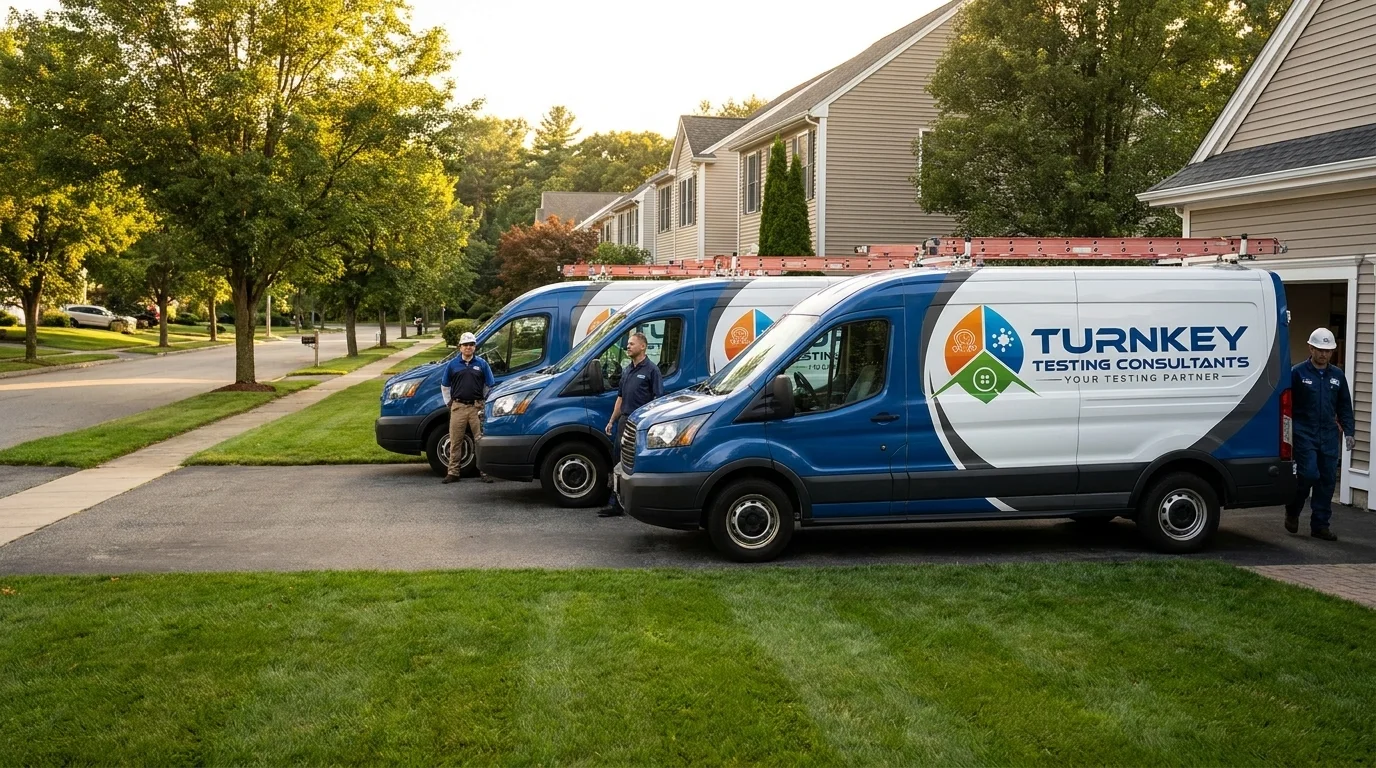
Turnkey Testing Consultants handles mold inspection and testing for homes in Burlington, using lab-analyzed air and surface samples rather than a single over-the-counter kit, which lets you compare indoor results against an outdoor baseline and pinpoint which rooms actually have elevated spore counts. If testing confirms active growth, the next step is mold remediation, which involves containing the affected area, removing material that can’t be cleaned, and drying the space so the problem doesn’t just regrow in six months.
What the Longer Process Looks Like
Finding mold is really step one. A thorough process generally looks like this:
- Inspection and sampling. A technician looks at the affected area, checks moisture levels in surrounding materials with a meter, and collects air and/or surface samples alongside an outdoor control sample.
- Lab analysis. Samples go to an independent lab, which identifies spore types and concentrations. This usually takes a few business days.
- Reviewing results. The report tells you whether indoor levels are elevated compared to outdoor baseline, and which species are present, which matters because some grow faster in continuously damp conditions than others.
- Remediation, if needed. This is where affected material gets contained, removed if it can’t be cleaned, and the space dried down to normal moisture levels.
- Addressing the moisture source. None of the above holds if the leak, condensation point, or drainage issue that caused the growth isn’t fixed. This part often falls outside mold-specific work and may need a plumber, roofer, or contractor.
If your home was built before the 1980s and the area in question involves disturbing older plaster, pipe insulation, or flooring during remediation, it’s worth asking whether asbestos testing should happen first. Turnkey Testing Consultants also handles asbestos abatement, so if a remediation job in an older Burlington home uncovers suspect material, that’s something to flag before any demolition starts.
Making the Call
A DIY kit isn’t a waste of money. It’s a reasonable way to confirm a hunch before you decide to spend more. But if you’re dealing with a visible stain, a persistent smell you can’t locate, a health concern, or a real estate transaction on the line, a professional inspection gives you an actual answer with lab backing, not just a yes-or-no on a petri dish. If you’re in Burlington and want a straight answer about what’s in your air or behind your wall, call Turnkey Testing Consultants at (978) 482-6260 to talk through what testing would involve for your specific situation.